Understand. Detect. Act.
Three products, one chain of evidence. Isomer™ Graph understands every communication, Isomer Signals detects the risk in it, and Isomer Actions sets out and runs the next best actions. Start with Signals.
How they work together.
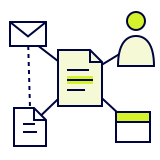
One read of every communication, at the point of receipt, and three jobs done with it.
Understand
Isomer Graph
What’s in the claim? Reads every communication and attachment, and places the facts on the claim graph with their relationships and their source.
Detect
Isomer Signals
What matters, and when? Checks the graph against 90+ insurance detectors and raises a signal when the evidence meets a detector’s definition, cited to sentence and page.
Act
Isomer Actions
What happens next? Routes each signal, recommends the next best actions as an action plan, and runs routine work, with the adjuster in charge.
Every step cites the one before it, back to the page.
One claim, from the message to the work. Graph finds the facts, Signals finds the risk, and Actions sets out what to do next.
The messageGraph
Email from the store managerIncident report and vendor agreement attachedIncident report · p. 2“Entrance mat curled at the edge.”Service agreement · p. 6“Store named as additional insured.”The factsGraph
Mat vendor, a party to the claimVendor contract, with the store as additional insuredEach fact cites its page.
The signalSignals
HighVendor contract names the store as additional insuredCites both facts.
The action planActions
Tender the claim to the vendor’s carrierR. Patel · due Oct 22Cites the signal and the Contractual Risk Transfer Guidelines.
The recordActions
Task and diary date written to your claim systemApproved by R. Patel, with an audit trail.
Read-only in. Structured results out.
- Reads from Microsoft 365 or Google Workspace by scoped OAuth, mail forwarding, API, or a sovereign install in your tenant. Past mail there builds the claim graph from day one; adjuster inboxes and the claim system keep it current after the claim is set up.
- Writes to the handler, a daily report for claims leadership, a webhook, or notes and tasks in your claim system where that’s configured.
- Builds on what you already run. No claim-system project or schema work to start, and a short briefing for handlers.
- Not a claim system. It writes back to yours.
- Not another model on your fields. It reads the documents the fields leave out, as they arrive.
- Not an assistant you have to ask. It reads every document on every claim, without anyone asking.
- Not a black box. Every signal cites its page.
- Not autonomous. Your rules set what runs on its own; everything else goes to a person.
Start with a workshop, on claims like yours.
Your team learns where risk hides in the claim file and how AI reads it, builds synthetic claims modeled on your book, and sees Isomer find the risk in them. You leave with a business case for your book. No data access needed.